-900x216.jpg)
Religion
Our vision:
At West Town Primary Academy (WTPA), we believe that supporting children to become well-rounded, happy and spiritually aware citizens will stand them in the best stead for their lives as they move on from primary school. Our Religious Education lessons introduce children to skills and knowledge that help them understand and appreciate their place in the world and how that relates to everyone else – from their family, friends and peers, to those living very different lives around the world.
Intent:
Through learning both about religion, and from religion, and within our well-rounded curriculum and school ethos, our children further develop tolerance, understanding and respect for other people’s beliefs. They understand the value of religion and of beliefs and how they relate to areas of society. Having an understanding of these beliefs and elements, helps the children to reach their potential in areas like empathy and social conscience, which is then reflected and resonated within WTPA’s values, plus further extended and embedded when classes, for example, discuss wider social ideas such as prejudice, segregation and multi-cultural living.
At WTPA, we actively celebrate different religions, values and beliefs, so Religious Education provides a wonderful opportunity to further develop the children’s understanding of similarities and differences within society.
In order to give our children a comprehensive grounding in skills and knowledge of the world around them, we have had to adapt to an ever-changing world.
It is through this comprehensive approach that Religious Education provides a wide-ranging and valuable introduction to WTPA’s pupils in all areas of religious, ethical and philosophical education.
Implementation:
Each year, the children learn about a focussed area of Christianity, which builds and develops their understanding of faith and religion in context. During their time at West Town, they will also learn about individual focus religions – Islam, Hinduism, Sikhism, Buddhism and Judaism – in which the children learn about the main aspects of these faiths, compare them, and learn about their role in the wider world of faith. Aspects of different faiths include strands on:
- Places of worship
- Beliefs
- Values
- Ceremonies and traditions
- Food
- Marriage and rites of passage
- Festivals
- Special days
- Coming of age
What does Religious Education look like in our classrooms?
Our classrooms thrive with discussion, and never more so than during Religious Education lessons. When tackling issues such as forgiveness, children love to practise and refine their oracy skills by expressing their views, building upon others’ thoughts and articulating their feelings. Our children have become increasingly good at doing this respectfully, all the while taking into account others’ beliefs and points of view.
Our written work in Religious Education shows a range of activities and work often crosses over into and links with other curriculum areas like art and maths, where for example the children might be making special Diyas or Rangoli patterns for Diwali or retelling the Easter story with story maps.
During lessons, we make use of lots of storytelling from different religions, faiths, aspects and eras. Stories, myths and legends help to engage the children, they encourage them to make connections and build understanding, therefore make learning more effective.
What does Religious Education look like outside the classroom?
WTPA is an academy committed to being at the heart of our local community – we like to visit local places of worship and continue making new links with the people and areas around us. Our children have enjoyed visits from members of the Peterborough City Church to support the learning of Advent. To support children’s learning about world religions we have links to Peterborough’s Bharat Hindu Samaj Mandir, Sri Guru Sing Sabha Gurdwara, Medina Madrassa and Spiritual Centre and the Peterborough Liberal Jewish Community. Children compare the people and places to their own places of worship or special places. Furthermore, Peterborough Cathedral is a rich source of learning for us, and we also enjoy taking part in their education outreach programmes. These kinds of enrichment activities can be so significant in our children’s aspirations and future beliefs.
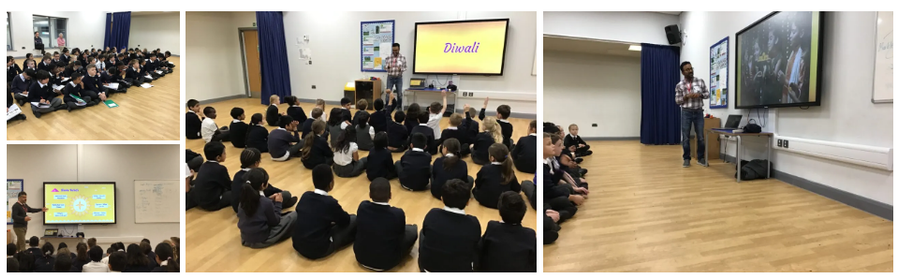
Our KS2 pupils were keen to learn about Hinduism and the festival of Divali from our visitors. They listened intently and asked engaging questions to understand more about this faith. We thank our visitors for their time.