-900x216.jpg)
Design & Technology
Our Vision:
Design and technology education makes an essential contribution to the creativity, culture and wealth of the world we live in. We aim to equip pupils with a range of knowledge, skills and understanding so they become resourceful, creative and curious citizens.
Intent:
At West Town Primary Academy, we are DESIGNERS and TECHNOLOGISTS! We want the children to have no limits to what their ambitions are and grow up wanting to be architects, graphic designers or chefs. Design and Technology is dynamic, aspiring and multidimensional. It is our intention that our DT curriculum will provide opportunities to solve real and relevant problems, allowing our pupils to develop essential everyday skills and unlock their potential to be the designers and innovators of tomorrow.
At West Town Primary Academy, we encourage pupils to use their ingenuity and originality to design and make products as a response to relevant problems within a variety of contexts, considering the needs, wants and values of others. Within a sequence of learning, children are also given opportunities to reflect and evaluate past and present designs, enabling them to become innovators and risk-takers. Design and Technology will allow all pupils at West Town Primary Academy to put their learning from other areas of the curriculum into practice and will work to enhance and deepen their understanding of those areas, including Maths, Computing, Science, and Art. West Town Primary Academy pupils will learn about cooking, food and nutrition, ensuring that they acquire the fundamental life skills in order to be able to feed themselves healthily and independently, whilst learning about where food comes from, therefore making connections with their geographical and scientific knowledge. We want to equip them with not only the minimum statutory requirements of the Design and Technology National Curriculum but to prepare them for the opportunities, responsibilities and experiences of later life.
Implementation: What does design & technology look like in our classrooms?
The Design and Technology national curriculum outlines the three main stages of the design process: design, make and evaluate.
Each stage of the design process is underpinned by technical knowledge which encompasses the contextual, historical, and technical understanding required for each strand. Cooking and nutrition has a separate section, with a focus on specific principles, skills and techniques in food, including where food comes from, diet and seasonality. The national curriculum organises the Design and Technology attainment targets under five subheadings or strands:
- Design
- Make
- Evaluate
- Technical knowledge
- Cooking and nutrition
Our curriculum has a clear progression of skills and knowledge within these five strands across each year group.
At West Town, pupils respond to design briefs and scenarios that require consideration of the needs of others, developing their skills in six key areas:
- Mechanisms
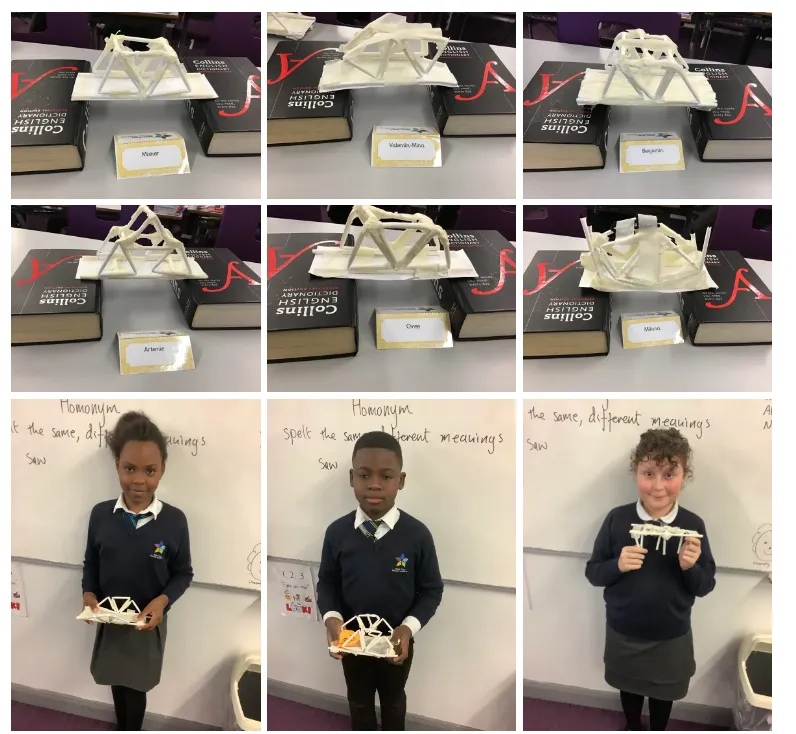
- Structures
- Textiles
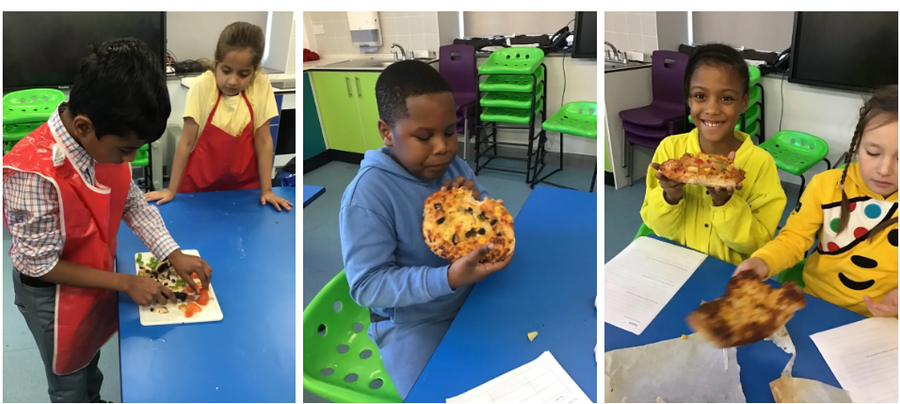
- Food
- Electrical systems (KS2) and
- Digital world (KS2)
Each of our key areas follows the design process (design, make and evaluate) and has a particular theme and focus from the technical knowledge or cooking and nutrition section of the curriculum. We revisit areas again and again with increasing complexity, allowing pupils to build on their previous learning. Lessons incorporate a range of teaching strategies from independent tasks, paired and group work including practical hands-on, computer-based and inventive tasks. This variety means that lessons are engaging and appeal to those with a variety of learning styles. The DT curriculum will encourage our children to learn, think and intervene creatively to solve problems both as an individual and as part of a team. At West Town, we strongly believe that Design and Technology is a crucial part of school life and learning and it is for this reason that as a school we are dedicated to the teaching and delivery of a high-quality Design and Technology curriculum.
This is implemented through:
- A well thought out, whole school, yearly overview of the DT curriculum which allows for progression across year groups in all areas of DT (textiles, mechanisms, structures, food and electrical systems)
- Well planned and resourced projects providing children with a hands-on and enriching experience
- A range of skills being taught ensuring that children are aware of health and safety issues related to the tasks undertaken
- Teachers being given ownership and flexibility to plan for Design and Technology; often teaching DT as a block of lessons to allow the time needed for the children to be critical, inventive and reflective on their work.
- Each project from Year 1 to Year 6 addressing the principles of designing, making, and evaluating and incorporating relevant technical knowledge and understanding in relevant contexts.
- Pupils being introduced to specific designers, chefs, nutritionists, etc. helping to engender an appreciation of human creativity and achievement and increase the cultural capital from which they can draw in the future.
Early Years Foundation Stage:
During the EYFS pupils explore and use a variety of media and materials through a
combination of child initiated and adult directed activities. They have opportunities to
learn to:
- Use different media and materials to express their own ideas
- Use what they have learnt about media and materials in original ways, thinking about form, function and purpose
- Make plans and construct with a purpose in mind using a variety of resources
- Develop skills to use simple tools and techniques appropriately, effectively and safely
- Select appropriate resources for a product and adapt their work where necessary
- Cook and prepare food adhering to good health and hygiene routines.
The expected impact of our meticulously designed curriculum is that our children will:
- Understand the functional and aesthetic properties of a range of materials and resources.
- Understand how to use and combine tools to carry out different processes for shaping, decorating, and manufacturing products.
- Build and apply a repertoire of skills, knowledge and understanding to produce high quality, innovative outcomes, including models, prototypes, and products to fulfil the needs of users, clients, and scenarios.
- Understand and apply the principles of healthy eating, diets, and recipes, including key processes, food groups and cooking equipment.
- Have an appreciation for key individuals, inventions, and events in history and of today that impact our world.
- Recognise where our decisions can impact the wider world in terms of community, social and environmental issues.
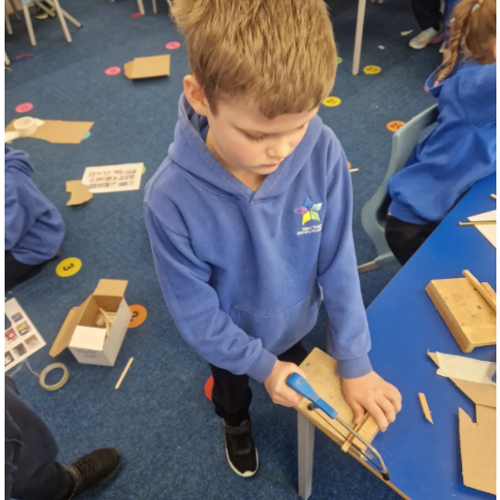
What does design & technology look like outside the classroom?
Supporting your child’s design & technology learning at home:
Our children thoroughly enjoy sharing their learning with their parents, carers, families and friends. If you would like to support your child’s DT experiences, opportunities and learning at home, there are a number of different activities and websites you can try below as a starting point:
Oxford Owl Art and Design at Primary School:
- https://www.oxfordowl.co.uk/for-home/school-year/subject-guides/art-and-design-at-primary-school/
- BBC Bitesize, Art and Design: https://www.bbc.co.uk/bitesize/subjects/z8tnvcw
- BBC Bitesize, Artists for KS1: https://www.bbc.co.uk/bitesize/topics/zdgrd2p
- CBBC Creative Lab: https://www.bbc.co.uk/cbbc/games/cbbc-creative-lab-fun-art-game
- BBC Bitesize, KS1 Design Technology: https://www.bbc.co.uk/bitesize/subjects/zb9d7ty
- BBC Bitesize, KS2 Design Technology: https://www.bbc.co.uk/bitesize/subjects/zyr9wmn
LKS2:
UKS2: